(versione italiana qua)
The new Operational Plan for the implementation of the National Digital Skills Strategy, prepared by the Department for Digital Transformation of the Presidency of the Council of Ministers, has just been published.
Axis 1 of this Operational Plan is dedicated to Education, with two lines — 1.1 (Schooling) and 1.2 (Higher Education), covering schools and universities respectively, with coordination responsibilities assigned to the two corresponding ministries.
For schools (line 1.1), five areas of intervention are outlined for the Strengthening of digital competences within schools (the very use of the term “digital” rather than “informatics” is a sign that something is amiss). For universities (line 1.2), eleven areas of intervention are identified for the Strengthening of digital competences within the national higher education system (all the more worrying, given our desperate need for graduates in informatics and informatics engineering).
The plan ties in with the investment lines defined within the PNRR, which however presents — for those falling under Axis 1 — the same problems I had already flagged.
Among the five actions planned for line 1.1 (the only one I am discussing here), I note that one of the two aimed at the Development of students' digital competencies and culture—namely "#4 New skills and new languages"—has the objective (plan p.53) to «strengthen STEM, digital, and the most innovative competencies, particularly for female students». It sets as a milestone (monitoring, p.36) the "Launch of scientific depth-study programs" in 8,000 schools by June 2025. While it is fundamental to teach scientific disciplines more effectively, digital transformation will not happen unless there is a commitment to teaching Informatics – the science at the core of the digital world.
I also observe that the action aimed at Digital Training for Teaching Staff – namely action "#5 New Integrated Digital Teaching and Training on Digital Transition for School Personnel" – has as its objective (plan, p. 54) «developing teachers' digital teaching competencies through ongoing training that accelerates the digital transition and the adoption of a single integrated teaching model for all schools», and sets as its monitoring milestone (monitoring, p. 37) the «Training of 650,000 teachers and school staff with new digital competencies» by December 2024. First of all, I would point out that there is a world of difference between using informatics to teach and teaching informatics. Moreover, to be charitable, this is a rather optimistic target. Consider that the United Kingdom – a country not very different from ours in population size – embarked on the path of training school teachers to teach informatics with an allocation of £84 million over the four-year period 2019–2022, reaching 30,000 trained teachers in the first two years alone. Accounting for an acceleration effect, I would expect the total by end of 2022 to fall somewhere between 100,000 and 200,000. We are starting now, and December 2024 is only two years away. The Italian genius is capable of miracles, but I fear this is simply beyond the bounds of reason.
En passant, I would also draw attention to actions “#1 Next generation Classrooms” and “#2 Next generation Labs,” which (aside from the fashionable use of English labels) risk effectively handing over school digital infrastructures to the platforms of the Big Tech companies—and with them, the education and future of our children. This trend was already set in motion during the poorly considered management of the pandemic lockdown. We know that valid alternatives exist.
As for synergy with national and European policies, the new Operational Plan mentions the Digital Education Action Plan 2021–27 (DEAP 2021–27) only on p.24 (to note that it is aligned with this plan) and in a footnote on p.14. Neither the executive summary nor the infographic refers to it. This is somewhat surprising, given that the DEAP 2021–27 was published two years ago and marks a significant shift in European strategy on digital education, explicitly recognising the need to teach informatics at all levels of schooling. I have consistently drawn attention to this point, both during my hearing on the PNRR in the Senate (here is the text of my statement) and in the keynote lecture at the 13th conference of the Nexa Center for Internet & Society at the Politecnico di Torino. In the Operational Plan, none of the actions envisaged ever mentions the teaching of informatics. At regional level, I note the commendable exception of the Region of Puglia, which intends to fund computer science courses from basic to advanced level—but for the University of the Third Age! An undoubtedly valuable initiative, given how burdensome the digital divide is for older people. Yet perhaps the country’s productive system needs something more, wouldn’t you agree?
Against this backdrop, the report Informatics Education at School in Europe has just been published – a document to which I contributed as a scientific expert – which measures how various informatics topics are taught in European schools across different year groups. Its central message is that informatics education in schools is essential for equipping all citizens with the foundational knowledge needed to participate in, influence, and contribute to the development of the digital world. The report was published by Eurydice, a network of national education systems forming part of the European Education and Culture Executive Agency, which falls within the sphere of the European Commission's Directorate-General for Education, Youth, Sport and Culture, for which Commissioner Mariya Gabriel is politically responsible.
This is the same DG that oversaw the publication of the aforementioned DEAP, which, regarding Informatics, states verbatim: «Introducing informatics from an early age ... can help develop problem-solving, creativity, and collaboration skills. ... Actions to promote high-quality, inclusive informatics education can also positively impact the number of girls choosing informatics-related studies in higher education and later working in the digital sector or in digital professions in other economic sectors».
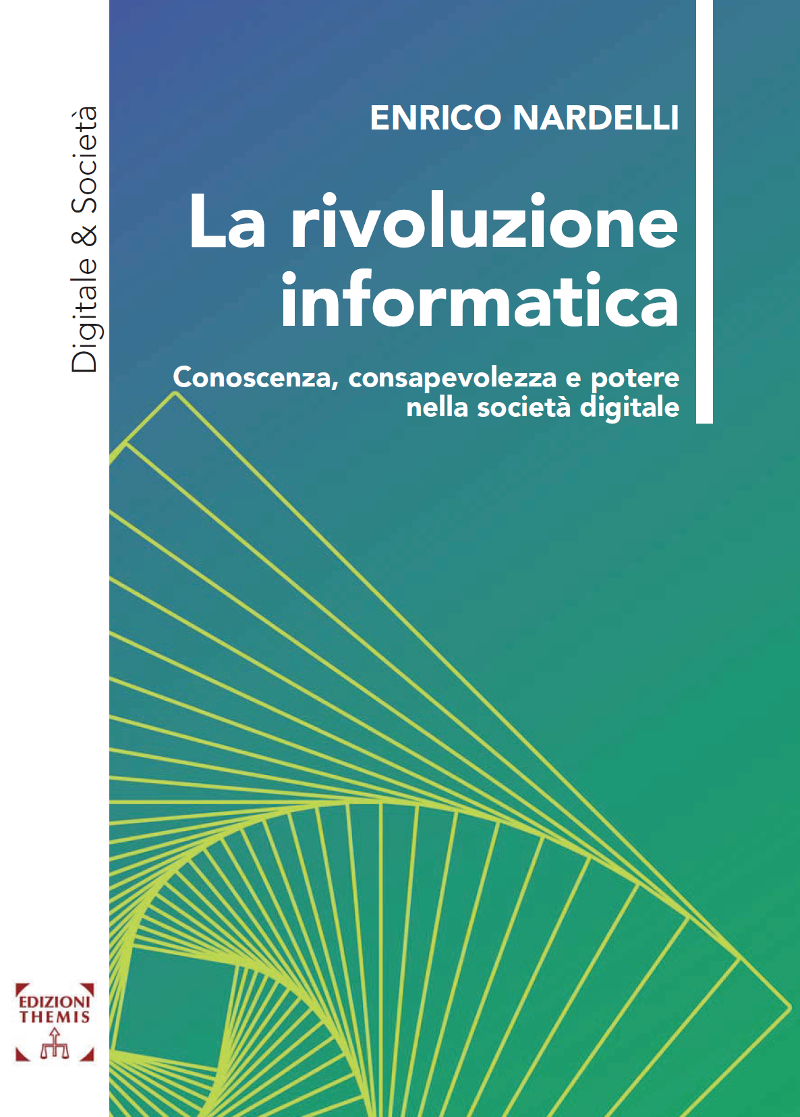
In short, it seems the direction indicated by Europe is clear. As stated in the DEAP 2021-27 supporting documents, teaching Informatics: «...enables young people to acquire a critical and practical understanding of the digital world. ... The benefits are social (...), economic (...), and pedagogical (...)». This is a topic I have discussed in depth, along with the role that spreading informatics culture can play in the country's economic development, in my latest essay: "The Informatics Revolution: Knowledge, Awareness, and Power in the Digital Society."
The original version (in italian) has been published by "Key4Biz" on 10 October 2022.


Nessun commento:
Posta un commento
Sono pubblicati solo i commenti che rispettano le norme di legge, le regole della buona educazione e sono attinenti agli argomenti trattati: siamo aperti alla discussione, non alla polemica.